
Have you ever looked at your bank balance at the end of the month and wondered where it all went? Not the rent, not the car payment — you know where those went. I mean the rest of it. The coffee here, the takeout there, the online order you barely remember placing. It adds up fast, and most of us never feel it happening.
I have been there. A few years back, I was earning a decent living but saving almost nothing, and I could not point to a single big expense to blame. It was death by a thousand small purchases. That is when I tried something that sounded a little extreme at first: a full month of no unnecessary spending.
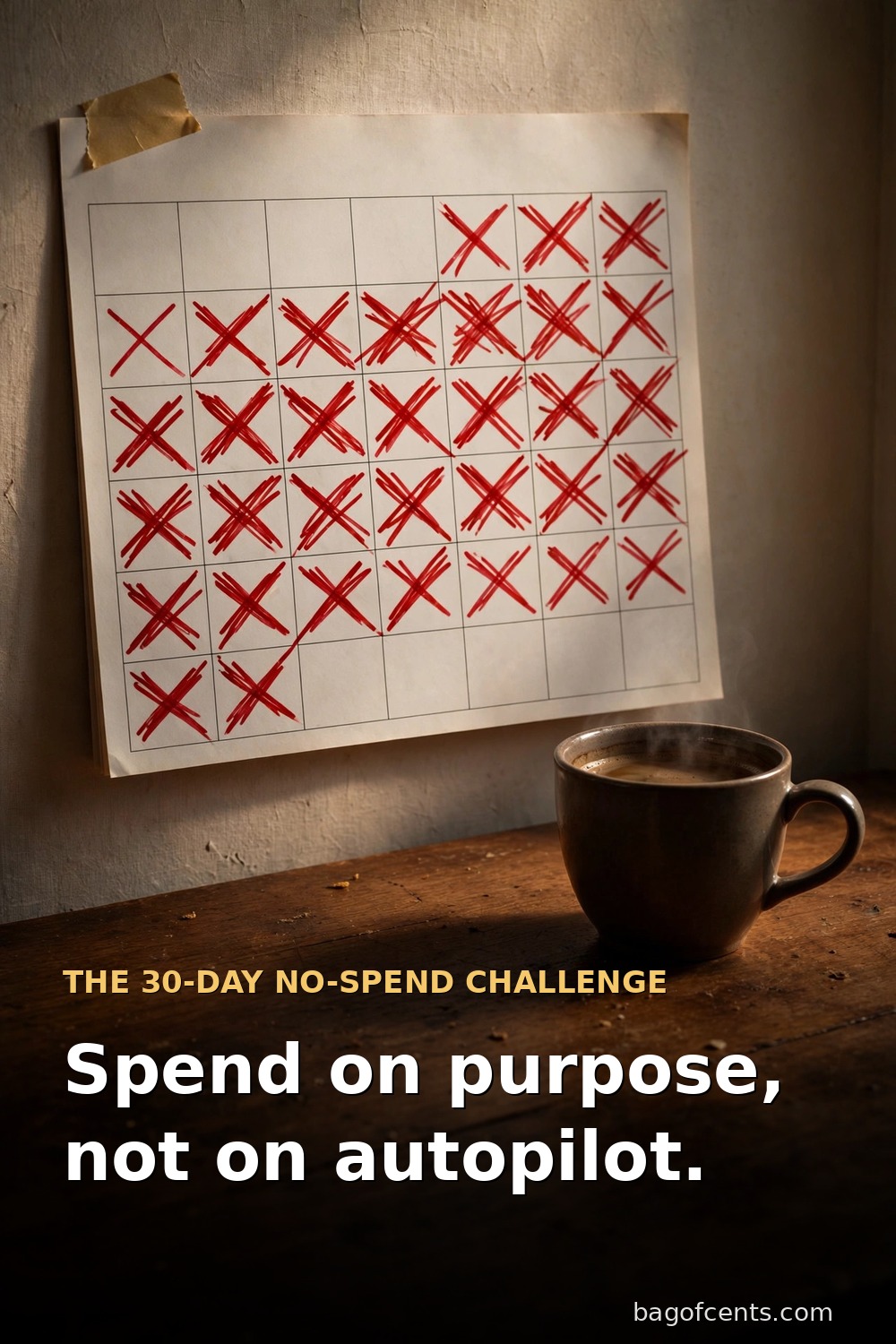
It worked. In thirty days, I saved more than I had in the previous six months combined — but the money was only half the story. The real win was learning the difference between what I wanted and what I actually needed. That lesson stuck with me long after the month ended.
If your spending feels like it is running on autopilot, a 30-day no-spend challenge might be exactly the reset you need. Here is everything I wish someone had told me before my first one: what it is, the ground rules, how to prepare, what each week feels like, and how to make the results last.
What Is a No-Spend Challenge, Exactly?
A no-spend challenge is a set period — usually 30 days — during which you commit to spending money only on true essentials. Everything else waits.
Notice what this is not. It is not a punishment, and it is not about being cheap. It is a short, intentional experiment with one goal: to break the habit of spending without thinking. For one month, every purchase has to earn its place. You stop buying out of boredom, stress, habit, or because something was on sale.
The challenge has clear boundaries, which is what makes it work. “Spend less” is vague and easy to ignore. “No non-essential spending for 30 days” is a line you can see. You either crossed it or you did not.
Most people do it for a calendar month, but you can start any day. The key word is challenge — it is supposed to stretch you a little. If it feels slightly uncomfortable, you are doing it right.
The Ground Rules
Before day one, you need to decide exactly what counts. Vague rules lead to creative excuses, so write your rules down — on paper, in your phone, anywhere you will see them.
What You CAN Spend On
These are your essentials — the non-negotiables that keep your life running:
- Housing: rent or mortgage, utilities, phone, internet.
- Groceries: food to cook at home. This is not the month for fancy ingredients, but you eat real meals.
- Transportation: gas, bus fare, tolls — whatever gets you to work and back.
- Health: prescriptions, doctor visits, anything medical. Health is never optional.
- Bills and obligations: insurance, minimum debt payments, childcare, anything with a due date.
- Pre-planned commitments: if you already bought concert tickets or agreed to a friend’s wedding before the challenge started, that spending already happened. Honor it and move on.
What Stays Off-Limits
Everything else. Specifically:
- Eating out, takeout, and delivery — including that “just this once” coffee.
- New clothes, shoes, and accessories.
- Entertainment spending: movies, streaming subscriptions you do not already have, books, games.
- Home decor, gadgets, and impulse Amazon orders.
- Gifts beyond what you already planned for.
- Subscriptions and free trials that convert to paid plans.
The Gray Areas (Decide These in Advance)
Every challenge has gray areas, and this is where most people quietly quit. Decide these before you start:
- Gifts: If a birthday falls during your month, set a small fixed budget or make something. Do not leave it to the moment.
- Social plans: You do not have to become a hermit. Suggest free alternatives — a walk, a potluck, a movie night at home. Real friends will not mind.
- Replacing broken essentials: If your work shoes fall apart or the fridge dies, that is a necessity, not a failure. Fix or replace it, buy the reasonable option, and keep going.
- Sales and “deals”: A 50%-off sale is still 100% spending. If you would not have bought it at full price this month, the sale does not make it essential.
Write your personal list. When temptation hits at 11 p.m. while you are scrolling your phone, you want the decision already made.
How to Prepare Before Day One
A little preparation makes the month dramatically easier. Spend a few days getting ready:
1. Pick your start date. The first of a month is tidy, but any day works. Just commit to a specific date and tell someone — accountability is powerful.
2. Do a small stock-up. Buy the groceries, toiletries, and household basics you will need for the first week or two. You are not hoarding; you are removing excuses. Running out of toothpaste on day three should not be the thing that breaks you.
3. Unsubscribe and unfollow. Marketing emails, sale alerts, shopping apps on your phone’s home screen — mute them all for 30 days. You cannot be tempted by what you do not see. Delete the shopping apps entirely; you can reinstall them later.
4. Tell your people. Let your partner, roommates, or close friends know what you are doing. You do not need their permission, but you do need them to understand why you are suggesting a home-cooked dinner instead of a restaurant.
5. Set a goal for the savings. A challenge without a purpose is just deprivation. Decide where the money you do not spend will go — paying down a balance, building savings, or funding a specific goal. Write the number you are aiming for. Watching that number grow is the fuel that carries you through week three.
6. Track your spending daily. Even though you are barely spending, write down every dollar that goes out. A simple notebook or a free app works. This is where the real education happens — you will see your true essential spending with unusual clarity.
Your Week-by-Week Walkthrough
Here is the honest truth about how the month actually feels, week by week.
Week 1: The Honeymoon
The first week is exciting. You feel in control, a little proud, maybe even a little smug. You cook at home, you pack lunches, and you start noticing how much of your old spending was pure habit. The morning coffee run? You make better coffee at home anyway. The savings pile up fast because you cut the easiest stuff first.
Watch out for: overconfidence. Week one is easy because the motivation is fresh. Do not mistake a good week for a finished job.
Week 2: The Itch
This is where it gets real. The novelty wears off, and the urges arrive right on schedule. You will want to eat out because you are tired. You will see something online and feel a genuine pang. Someone at work will suggest lunch, and saying no will feel awkward.
This is the most important week of the challenge. Every urge you ride out teaches your brain something: the feeling passes. It always passes. Nobody ever died of not buying a sweater.
What helps: have a list of free substitutes ready — the walk you like, the show you have been meaning to watch, calling a friend. And revisit your savings goal. Remind yourself what the money is for.
Week 3: The Shift
Something interesting happens around week three. The urges get quieter. You stop reflexively reaching for your wallet. You start finding genuine pleasure in the simple stuff — a home-cooked meal that actually tastes good, a Saturday that costs nothing and still feels full.
This is the week the challenge stops feeling like a restriction and starts feeling like freedom. You are not depriving yourself; you are choosing. There is a big difference.
What helps: keep tracking. By now your log shows a beautiful, boring list of essentials — and that is the point. Boring is cheap. Boring builds wealth.
Week 4: The Finish Line (and the Trap)
The final week brings a strange temptation: the urge to “celebrate” by spending. Do not blow a month of progress on a day-one shopping spree. You are almost there — finish strong.
Use this week to reflect. Look at your spending log from the month. Circle the things you genuinely missed, and circle the things you thought you would miss but did not. That second list is pure gold. It shows you exactly where your money was leaking with zero return on happiness.
Tips for Staying on Track
- The 30-day list. When you want something non-essential, write it on a list instead of buying it. If you still want it after the challenge ends, you can reconsider. Most items will look absurd by then.
- Meal plan simply. You do not need gourmet cooking — just a rough plan so you are never standing in front of an empty fridge at 6 p.m., which is when takeout wins.
- Find your free fun. Libraries, parks, hiking trails, free community events, game nights, long walks with a podcast. Make a list of ten free things you enjoy and keep it on your fridge.
- Automate the win. Move the money you are not spending into savings as you go, not at the end of the month. If it sits in checking, it will find a way to get spent.
- Do not aim for perfect. If you slip once, it is a slip, not a failure. Note it, learn from it, and keep going. Quitting because of one mistake is like slashing all four tires because one went flat.
- Remember your why. Put your savings goal somewhere visible — your phone wallpaper, your bathroom mirror. Motivation fades; reminders do not.
When the Month Ends: What Now?
Day 31 arrives, and here is the critical part: do not just go back to normal. “Normal” is what got you here.
Instead, do a proper debrief with yourself:
1. Review the numbers. How much did you save? How does that compare to a typical month? Let the number sink in.
2. Review the list. Go through your 30-day want list. Buy the one or two things you still genuinely want — guilt-free. You earned that discernment. Let the rest go.
3. Keep the best habits. Most people find two or three changes they actually like — cooking more, the daily spending log, the paused impulse buys. Keep those. You do not need the full challenge rules forever; you need the awareness.
4. Consider a lighter version going forward. Some people do a no-spend week every month, or keep the want-list rule permanently. Find the version that fits your life.
5. Put the savings to work. Move the money to its purpose immediately — debt, savings, your goal. Do not let it evaporate back into daily spending.
The real product of a no-spend challenge is not the money you saved in thirty days. It is the person you became: someone who spends on purpose. That is worth far more than one month’s savings.

Final Thought
A 30-day no-spend challenge costs you nothing to try and can change your relationship with money for years. The rules are simple, the month is finite, and the lessons are permanent. Pick a start date, write your rules, and go.
If you take the challenge, I would love to hear how it goes — and if this guide helped you, share it with someone whose spending could use a reset too. We all know that person. Sometimes that person is us.
Happy Budgeting!
Stanley
Leave a Reply