
Forget vague advice like “just spend less.” Here are 10 saving hacks with real numbers, real mechanics, and real results.
You’ve heard the generic tips a hundred times: skip the lattes, make a budget, stop buying avocado toast. If that advice worked, everyone would be rich by now. The problem isn’t that saving money is complicated — it’s that most tips are too vague to act on.
So here are 10 hacks that are specific enough to start today, each with the math to show why it works. None of them require a finance degree, a side hustle, or giving up everything fun. They’re small, practical changes that can realistically save you hundreds of dollars a month — if you actually do them.
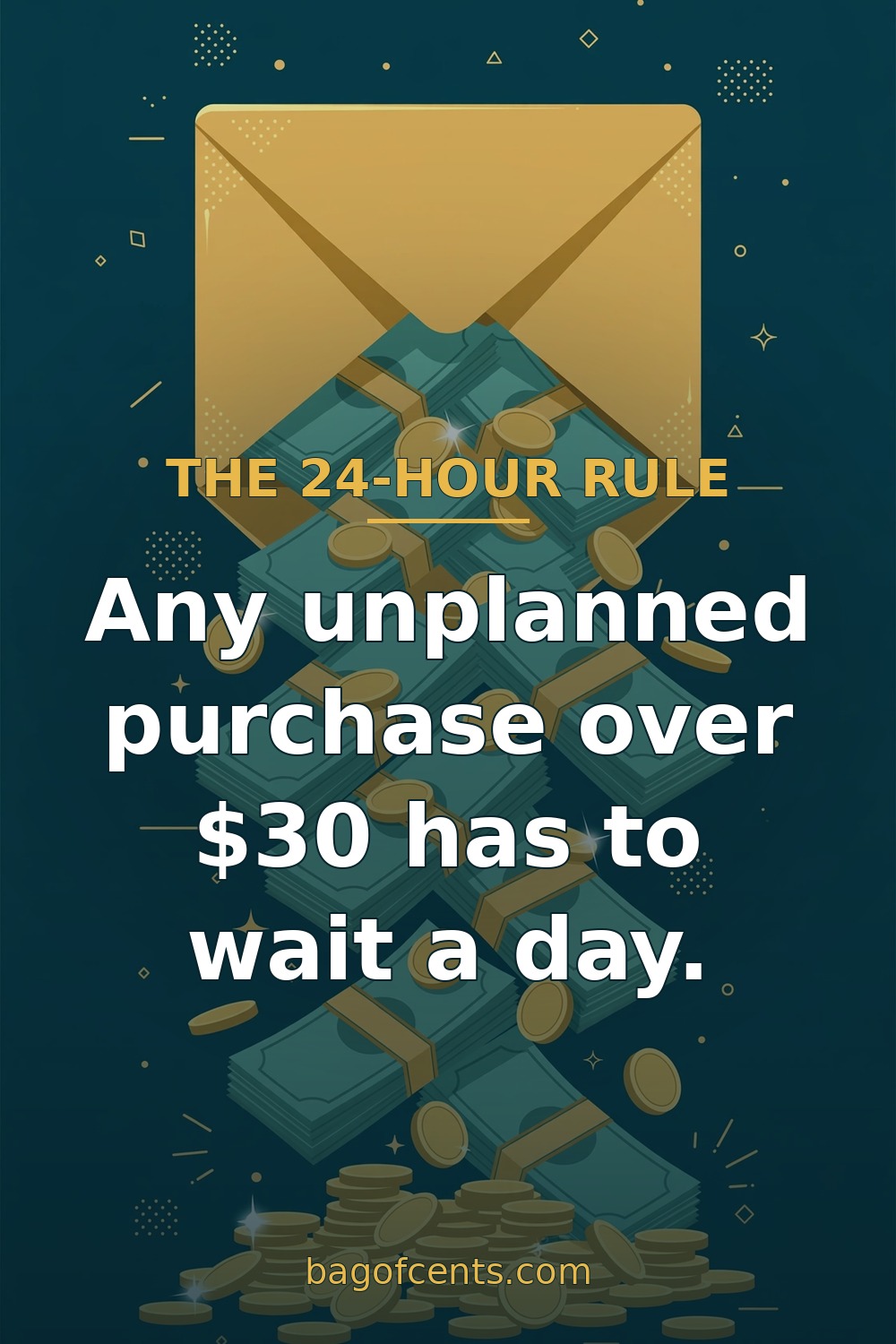
1. The 24-Hour Rule for Impulse Buys
The hack: Any unplanned purchase over $30 has to wait 24 hours. Put it in your cart, screenshot it, write it down — but don’t buy it until tomorrow.
Why it works: Impulse spending runs on emotion, and emotions have a short half-life. Most of the things you “need right now” feel completely forgettable the next morning. The 24-hour rule doesn’t ban spending — it just inserts a pause between the urge and the transaction, which is where most impulse buys die.
The math: If the rule stops you from making just two $40 impulse purchases a month, that’s $960 a year back in your pocket. Most people are surprised to find the number is closer to four or five stopped purchases once they start tracking.
2. The Subscription Audit
The hack: Once every three months, open your bank or credit card statements and list every recurring subscription — streaming, apps, gym, boxes, cloud storage, all of it. Cancel anything you haven’t used in the last 30 days.
Why it works: Subscriptions are designed to be forgotten. They charge you in the background, in small amounts, on different billing dates, so no single one feels painful. Added together, they’re a quiet leak. The average household carries several subscriptions it barely uses — and companies count on you never checking.
The math: Cutting just three forgotten subscriptions at $12.99, $9.99, and $16.99 a month saves $479.64 a year. Do the audit quarterly and the leak never gets a chance to grow back.
3. No-Spend Days (Start With Two a Week)
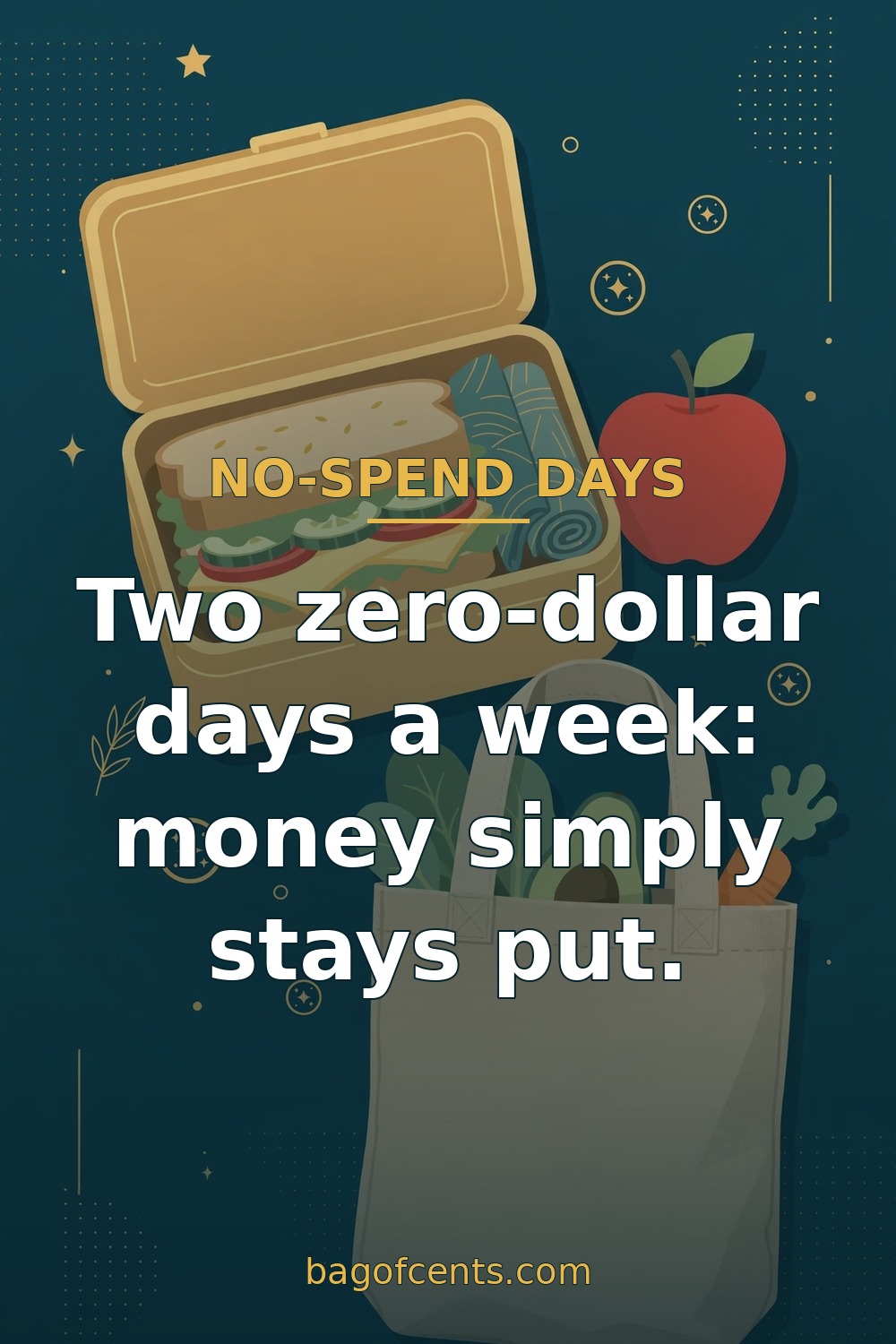
The hack: Pick two days each week where you spend $0 — no coffee runs, no delivery apps, no “just popping into” a store. Bills and pre-planned essentials don’t count; the target is discretionary spending.
Why it works: No-spend days break the daily spending reflex. Most small purchases aren’t planned — they’re the result of being out in the world with a wallet. Two zero days a week means roughly 8 days a month where your money simply stays put, and it trains you to distinguish “I want it” from “I’ll actually miss it.”
The math: If your average daily discretionary spending is $25, two no-spend days a week saves about $200 a month, or $2,400 a year. Even at $15 a day, that’s $1,440 a year. (Want to go further? Try the full 30-Day No-Spend Challenge.)
4. Pay Yourself First — Automatically
The hack: Set up an automatic transfer that moves money to savings the day after payday — before you can spend it. Start with whatever you can: $50, $100, 5% of your pay.
Why it works: Willpower is unreliable; automation isn’t. When saving is a manual decision you make at the end of the month, there’s never anything left. When it’s automatic, you adjust your spending to what’s actually in your chequing account — and you barely notice the difference after a month or two.
The math: $100 per paycheque, 26 paycheques a year, is $2,600 saved without a single decision. Bump it to $150 and you’re at $3,900. Small automatic amounts beat large intentions every time. (More on the method: Pay Yourself First.)
5. Cash Envelopes for Your Problem Category
The hack: Identify the ONE category where you always overspend — for most people it’s food, takeout, or clothing — and switch it to cash for a month. Put the budgeted amount in an envelope. When it’s empty, you’re done until next month.
Why it works: Cards make spending painless, which is exactly the problem. Handing over physical cash creates a moment of friction — you feel the money leaving. You don’t need to go full cash-only for everything; you just need friction in the one category where your discipline keeps failing.
The math: If takeout is your leak at $400 a month and the envelope caps it at $200, that’s $2,400 a year saved from a single category. The envelope doesn’t require budgeting skill — it requires an envelope.
6. Meal-Plan Math (The $15 Lunch Problem)
The hack: Plan your week’s meals every Sunday — just dinners and lunches, nothing fancy. Grocery shop once with a list. That’s the whole system.
Why it works: Food is the biggest flexible expense for most households, and most food waste comes from having no plan: you buy groceries with good intentions, they rot, and you order delivery anyway. A simple plan turns “what’s for dinner?” from a $30 decision into a $6 one.
The math: A $15 bought lunch, 4 days a week, costs about $240 a month. A packed lunch runs roughly $4–5 — call it $80 a month. That’s $160 a month, or $1,920 a year, from one habit. Add two fewer delivery dinners a week ($35 each) and you’re past $5,000 a year.
7. The 30-Day Want List
The hack: Keep a running list — phone note, fridge, wherever — of everything you want to buy but don’t need. Nothing on the list can be purchased until it’s been there 30 days. After 30 days, you can buy it guilt-free if you still want it.
Why it works: This is the 24-hour rule’s bigger sibling, for bigger purchases. A month is long enough for the excitement to fade on things you didn’t actually want, and long enough to research and price-compare the things you do. Most lists end up with half the items crossed off, not bought — which is the point.
The math: If the list filters out one $150 “want” purchase a month that you would otherwise have made, that’s $1,800 a year. And the things you do buy after 30 days tend to be better-researched and less regretted.
8. Bank Half of Every Raise
The hack: The next time your income goes up — a raise, a bonus, a new client — automatically redirect at least half of the increase to savings or debt payoff before your lifestyle adjusts to it.
Why it works: Lifestyle inflation is the silent killer of savings: every raise gets absorbed by a nicer apartment, a newer car, a fancier grocery store, and your savings rate stays flat forever. Banking half the raise lets you enjoy some of the increase while making sure your future self gets a cut too. You never miss money you never got used to having.
The math: A $3,000 annual raise, half banked, is $1,500 a year in new savings — every year, compounding with each future raise. Over a career, this one habit can be worth more than every coupon you’ll ever clip.
9. Unsubscribe From Every Marketing Email
The hack: Spend 20 minutes unsubscribing from every retailer’s marketing emails — the “FLASH SALE ends tonight” ones, the “we miss you” ones, all of them. Use the unsubscribe link, not the delete button.
Why it works: Those emails exist for one reason: to manufacture urgency and put products in front of you at your weakest moments (bored, tired, scrolling at 11pm). You can’t impulse-buy from a sale you never hear about. This is the rare hack that’s pure subtraction — it costs nothing and removes temptation at the source.
The math: If marketing emails trigger even one $50 unplanned purchase a month, unsubscribing saves $600 a year — for 20 minutes of clicking unsubscribe links. That’s an hourly rate of $1,800.
10. Renegotiate One Bill a Month
The hack: Each month, pick one recurring bill — phone, internet, insurance, gym — and call to ask for a better rate. Mention a competitor’s offer if you have one. Be polite, be persistent, and ask for the retention or loyalty department if the first person can’t help.
Why it works: Loyal customers routinely pay more than new ones — companies reserve their best prices for acquisition and count on existing customers never asking. A single phone call can cut a phone bill by $15–20 a month or an insurance premium by hundreds a year, and the new rate usually sticks for 12 months.
The math: Renegotiating 12 bills a year, saving an average of $15 a month each, compounds to over $1,000 a year in ongoing savings from about 12 hours of total effort. Few side hustles pay that hourly rate.
Common mistakes that undo good hacks
Mistake #1: Trying all ten at once. Overhauling your entire financial life in a weekend leads to burnout by Wednesday. Pick two hacks — the ones that address your biggest leaks — and run them for a month. Add more once the first two feel automatic.
Mistake #2: Saving without a destination. Money saved with no purpose drifts back into spending. Give every hacked dollar a job: an emergency fund, a debt payoff, a specific goal. “I’m saving $200 a month for my emergency fund” sticks; “I’m saving $200 a month” evaporates.
Mistake #3: Being so strict you rebound. A budget with zero room for fun is a diet with zero room for dessert — it ends in a binge. Build in a small guilt-free spending allowance. The goal is a system you can sustain for years, not a sprint you survive for weeks.
Mistake #4: Tracking spending but never changing it. Awareness without action is just expensive entertainment. If you’ve been tracking for months and your numbers never move, the tracking isn’t the hack — it’s procrastination in a spreadsheet. Pick the ugliest number and attack it with one hack from this list.
Quick answers to common questions
Which hack should I start with? The one aimed at your biggest leak. If you don’t know your biggest leak, do the subscription audit first (hack #2) — it takes an hour, finds money immediately, and shows you where your money is actually going.
Do small hacks really matter, or should I focus on earning more? Both matter, but they’re not either/or. Earning more with leaky spending just means leaking at a higher income. Hacks like these raise your savings rate — the percentage of income you keep — which is the number that actually builds wealth over time.
What if I’ve tried budgeting and it never sticks? Then stop trying to budget the traditional way. Hacks #4 (automation) and #5 (cash envelopes) work precisely because they don’t rely on ongoing discipline or detailed tracking. Design a system that works when your willpower doesn’t.
How much can these realistically save? It depends on your starting point, but someone applying even half of these hacks can reasonably free up $300–500 a month. That’s $3,600–$6,000 a year — without a raise, without a side hustle, just by plugging leaks you already know are there.
Final Thought
None of these hacks will make you rich overnight, and anyone who tells you otherwise is selling something. What they do is something quieter and more powerful: they change your relationship with the small, daily decisions where money actually disappears.
The 24-hour rule, the subscription audit, the automatic transfer — none of them are dramatic. But saving money was never about drama. It’s about a dozen small systems running in the background, month after month, while you get on with your life. Pick two hacks today. Your future self is counting on the person you are right now to start.
Liked this? Take it further.
Grab our free 52-Week Savings Challenge Tracker and save up to $1,378 in a year — one small weekly deposit at a time, with a printable tracker to keep you on course.
Join the Bagofcents weekly money tips email. Unsubscribe anytime.
Happy Budgeting!
Stanley
Leave a Reply